Nemeton
New weapons, and how they are made
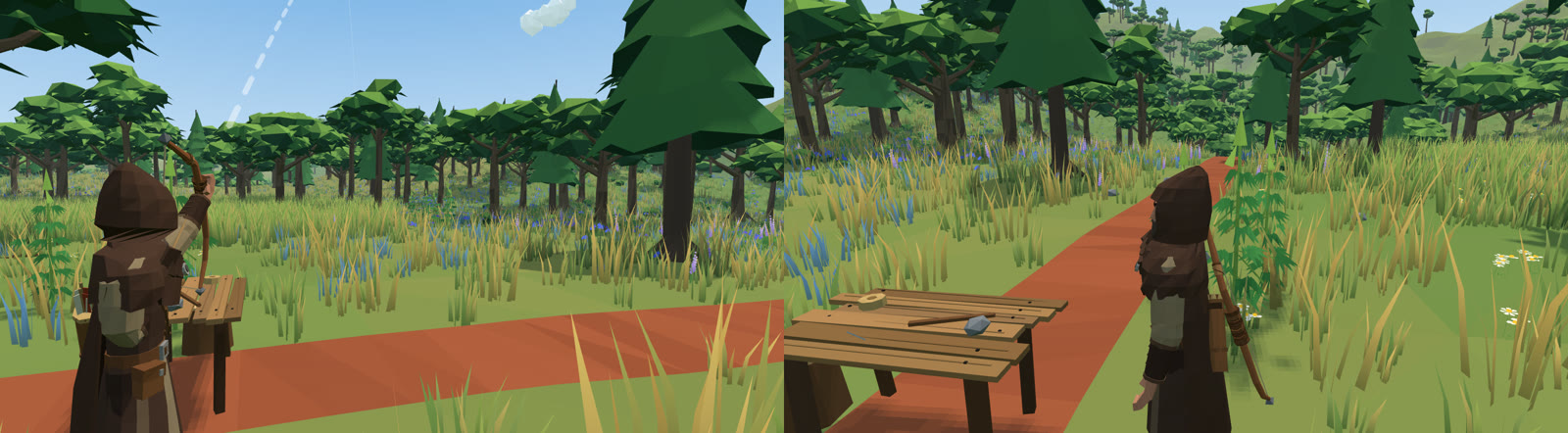
In one day every weapon and tool you carry got a new model: the iron axe (until now the heavy stone axe), the stone axe, the spear, the stone hammer and the bow. All of them follow one painted reference sheet of four tools, translated into the game's own materials: stone where a stone-age tool calls for it, leather and twine where the sheet has wraps. What they do in the game stayed the same: same recipes, strength and durability.
How the work goes
Nothing in Lowpoly is modelled in a 3D program. Every mesh is code: lists of points, rings and colours turned into flat-shaded triangles when the game starts. A new model takes many small rounds, and each round goes the same way:
- Read the sheet. Name every part (blade, poll, collar, sleeve, lacing, cuff, foot) and estimate its size compared with the rest. Proportions matter more than details.
- Build it in code from a few shapes: lofts (rings joined into a tube), boxes and cones, cords following a helix, and for the iron blade a curved patch stretched between four outlines.
- Render it in the studio. The game has a preview mode that draws one object on a plain background from four angles:
lowpoly --preview sheet.png --pose bow. The reference sits next to it, so any difference is easy to see. - Fix one thing at a time. Each round got a short note back, like "the top edge of the blade should not be a straight line", "the grip is too wide, by 15-20%" or "the limbs should be octagons too". We changed the code and rendered again. When guessing stopped working, we measured: the axe blade's outline was read off an enlarged, gridded sheet, point by point.
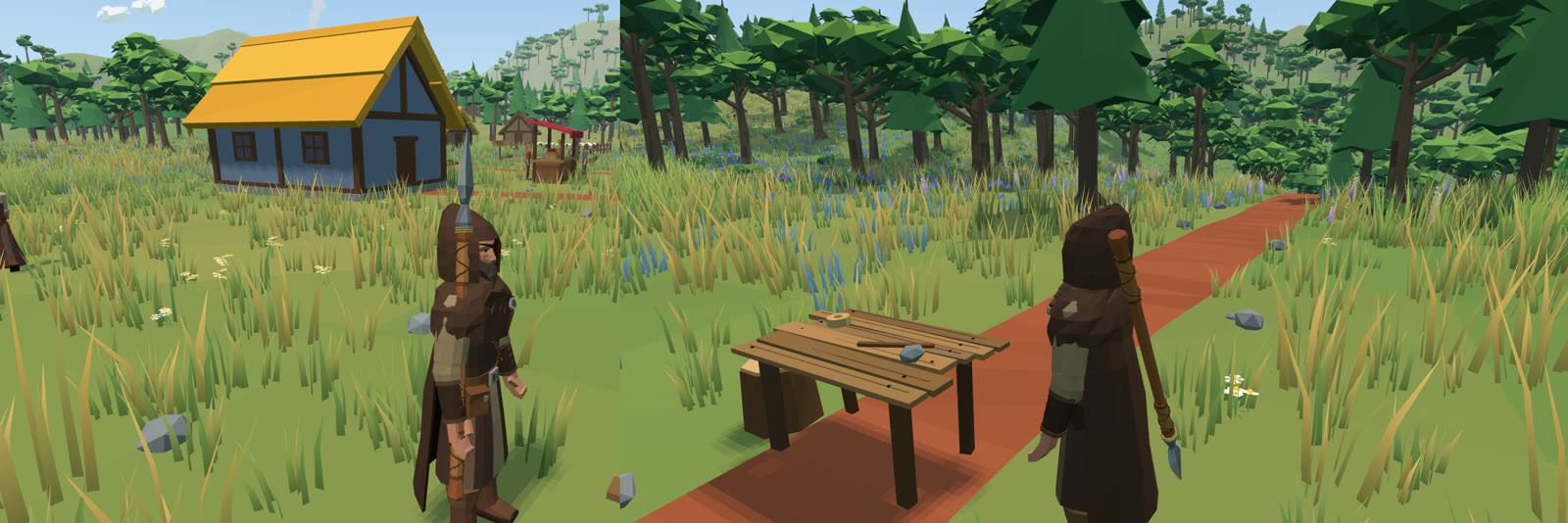
- Only then into the game. The finished model replaces the old one, gets a new inventory icon, and is checked in real screenshots: in the hand, on the back or at the belt, and in use.
The axes went through seven rounds and the bow through seven more. The axes have their own post, Two axes, step by step. Below are the other three.
The spear
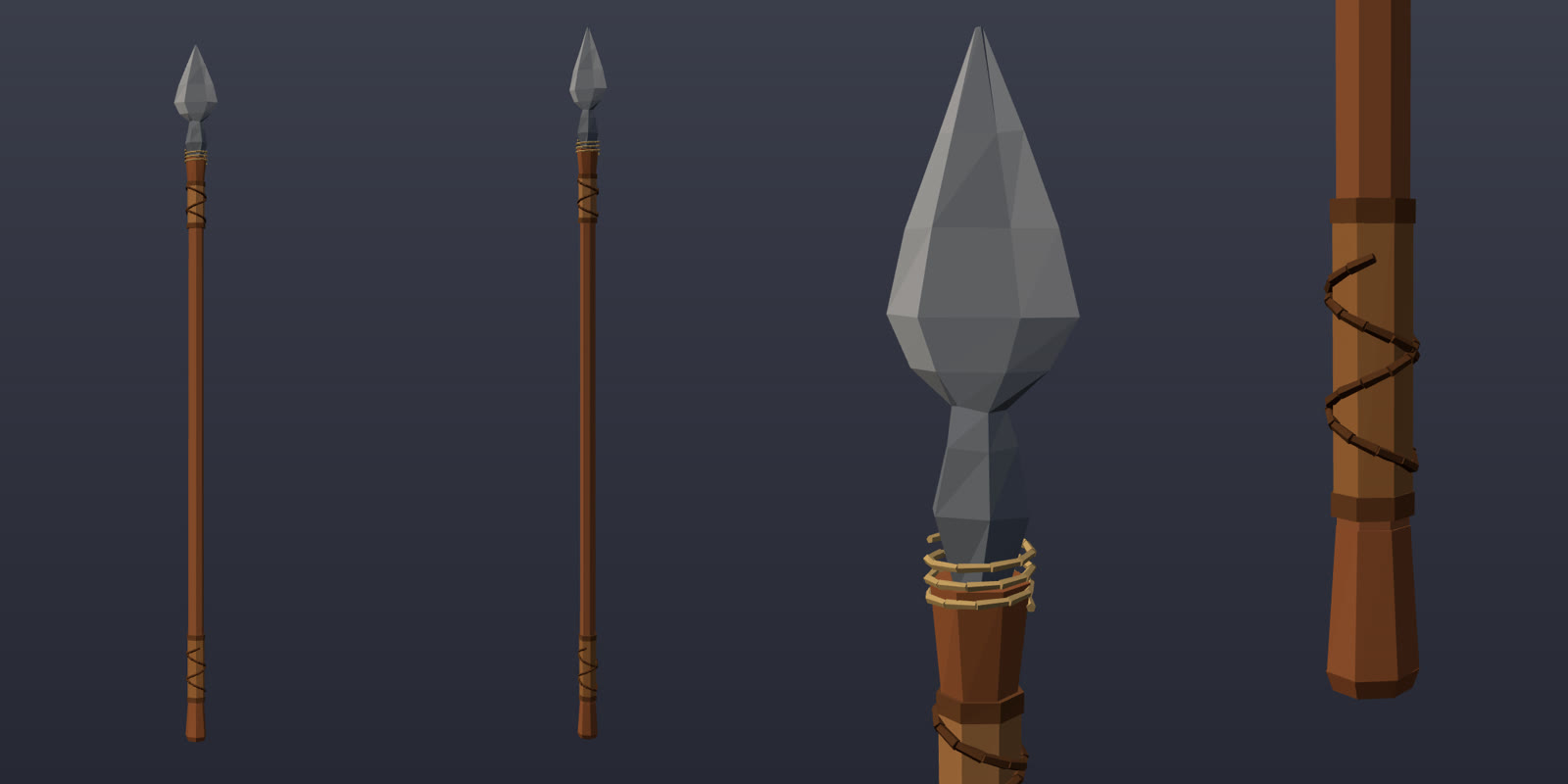
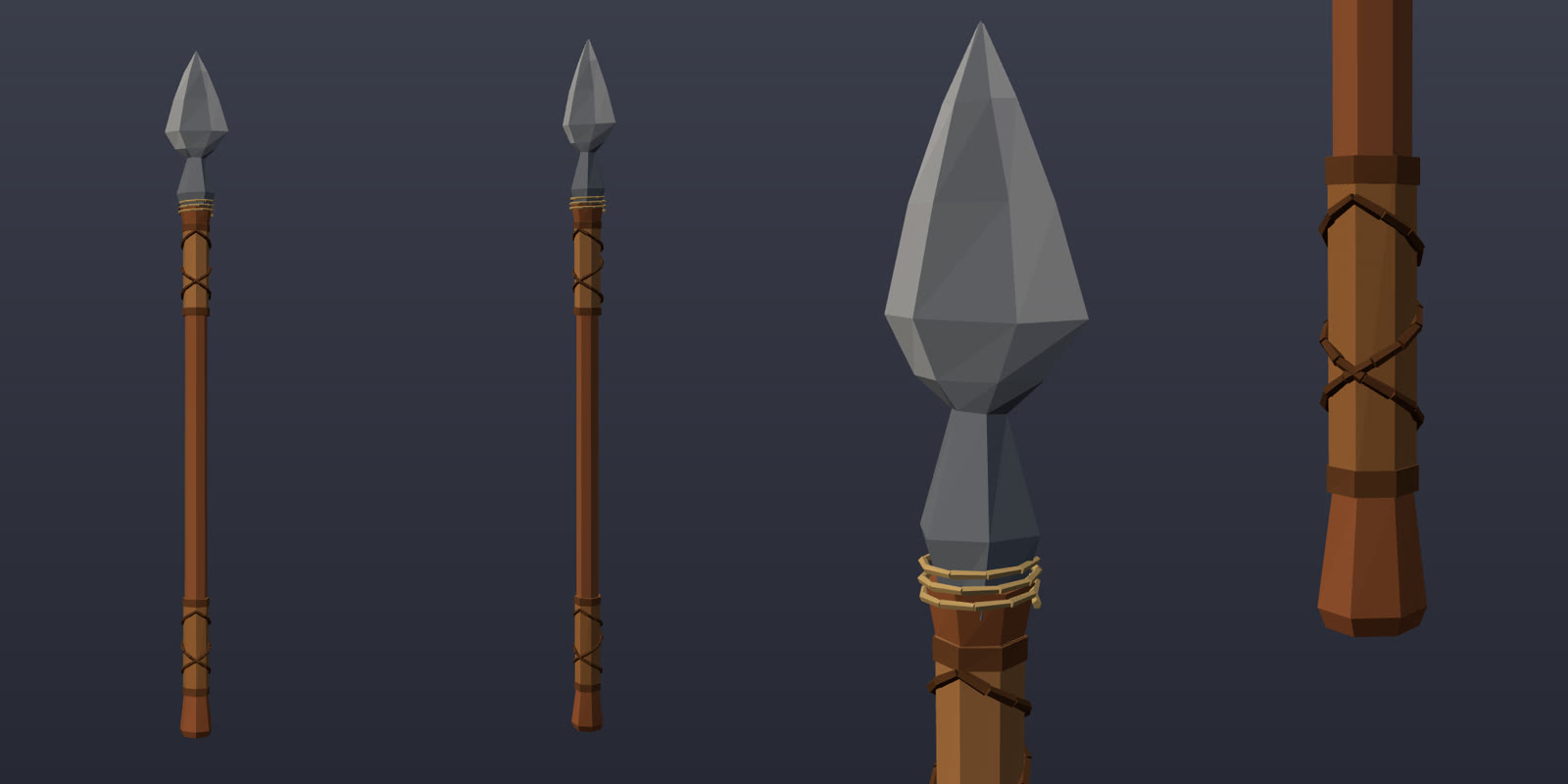
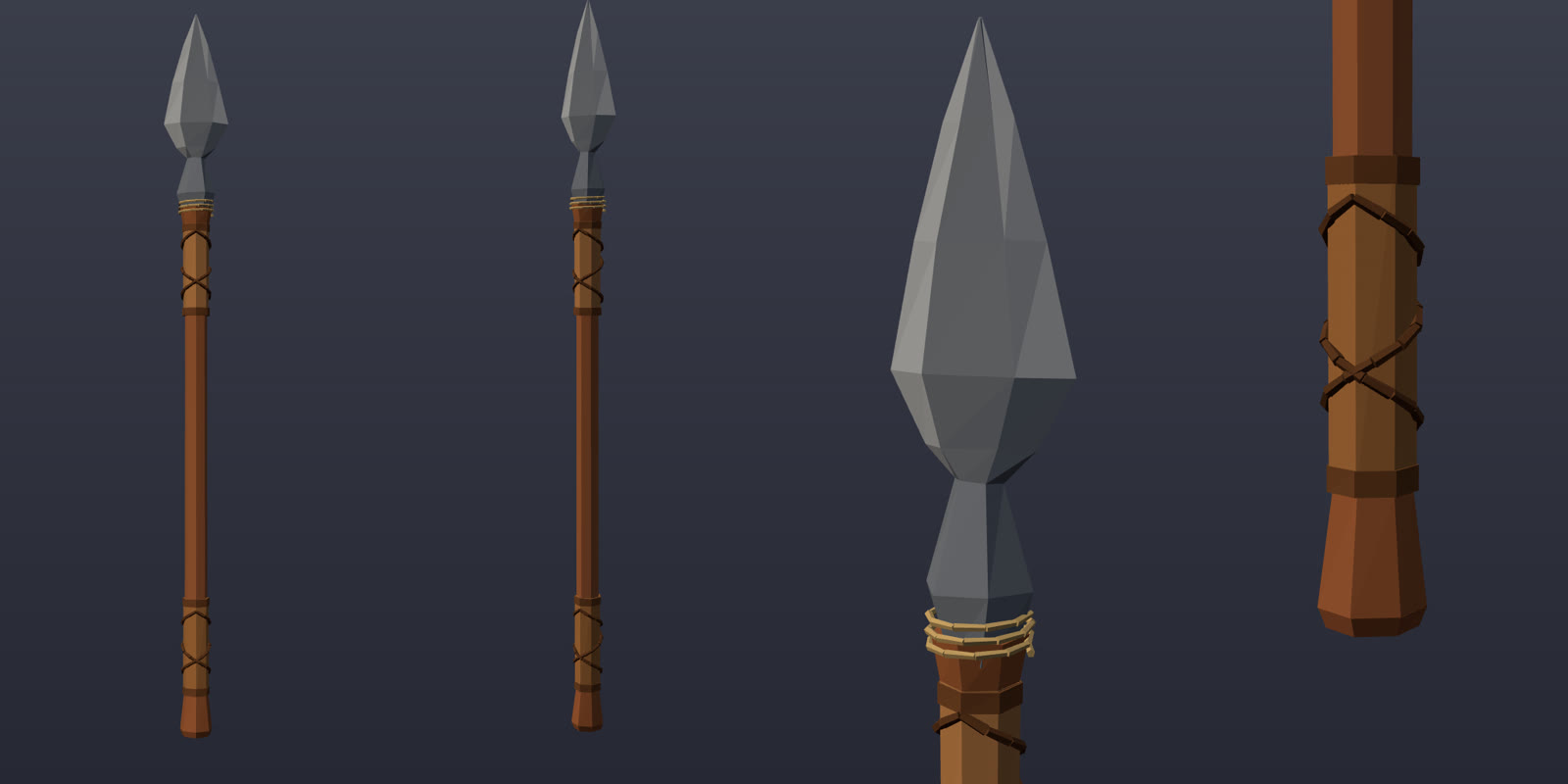
The sheet's spear has an iron head. Ours is knapped stone: a long leaf blade with a ridge and pale edges, sitting on a diamond collar bound with twine onto the shaft's flared top. The rest follows the sheet: a leather sleeve laced crosswise, a plain shaft, a laced wrap low down and a flared butt.
The first try was too slender. The sheet's spear is short and stout, so the second one took its proportions: a thicker shaft and a much bigger head, with the tip where it always was so that holding and throwing don't change. On the last look the blade was made longer.
The stone hammer
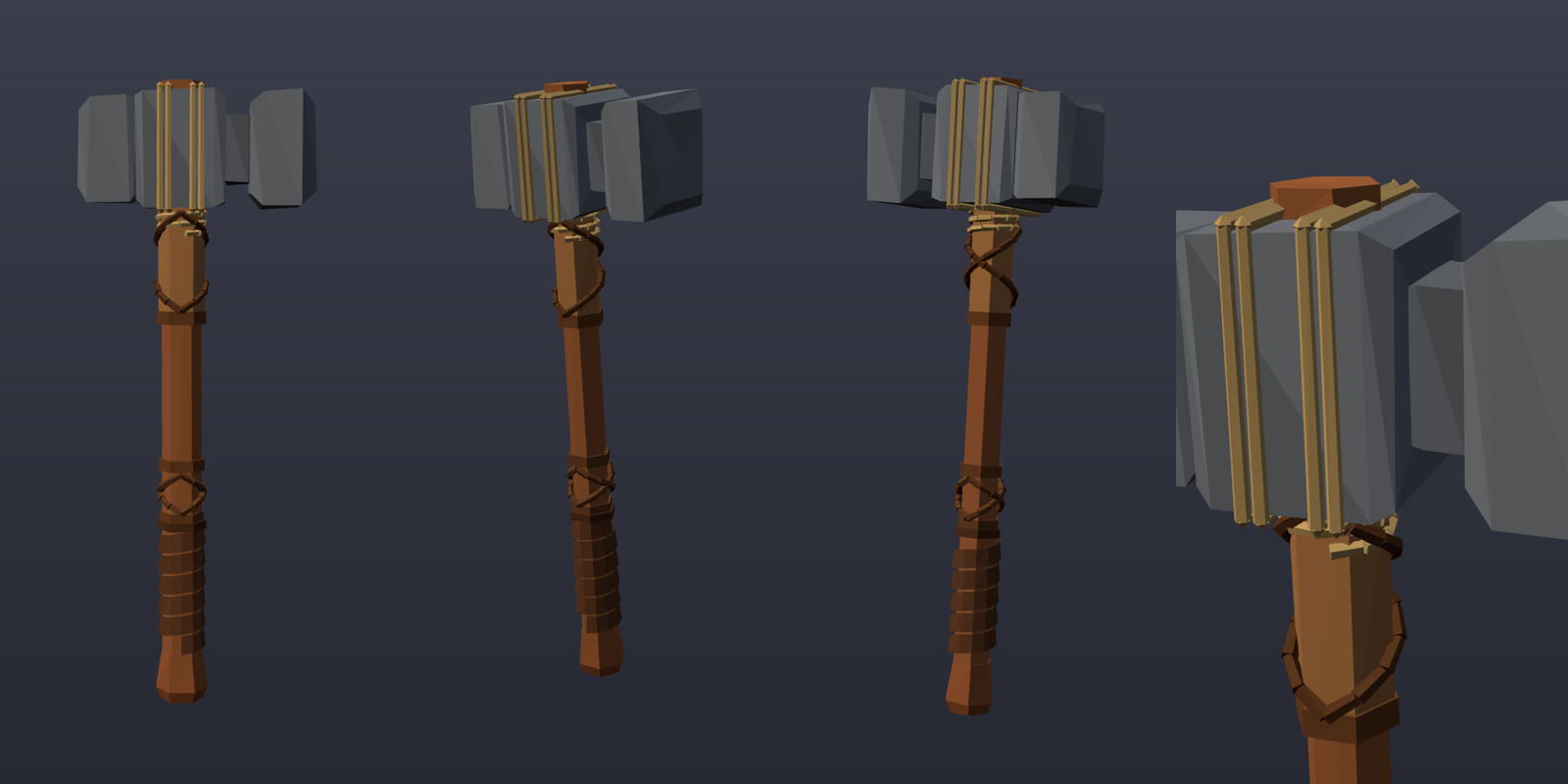
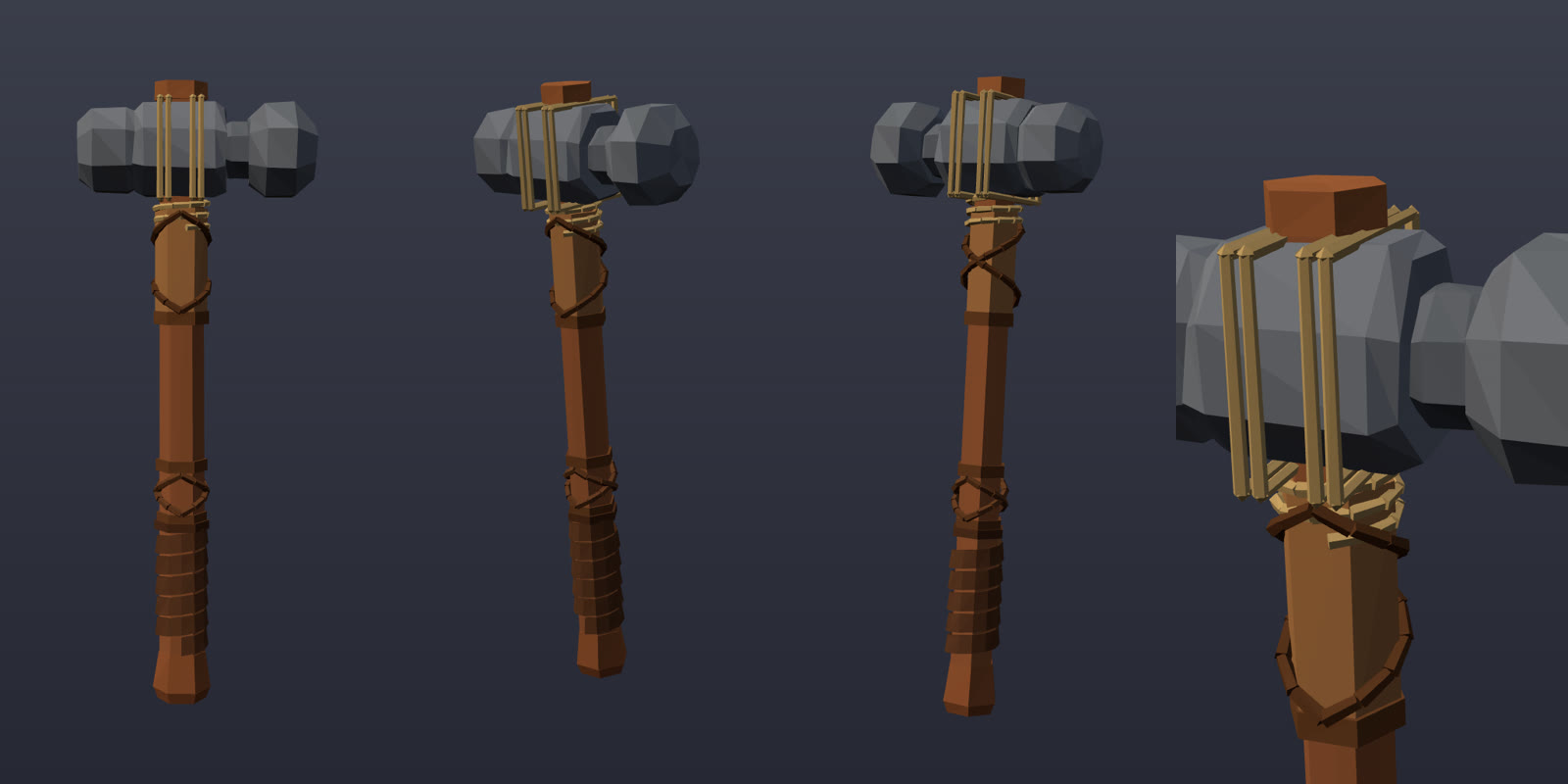
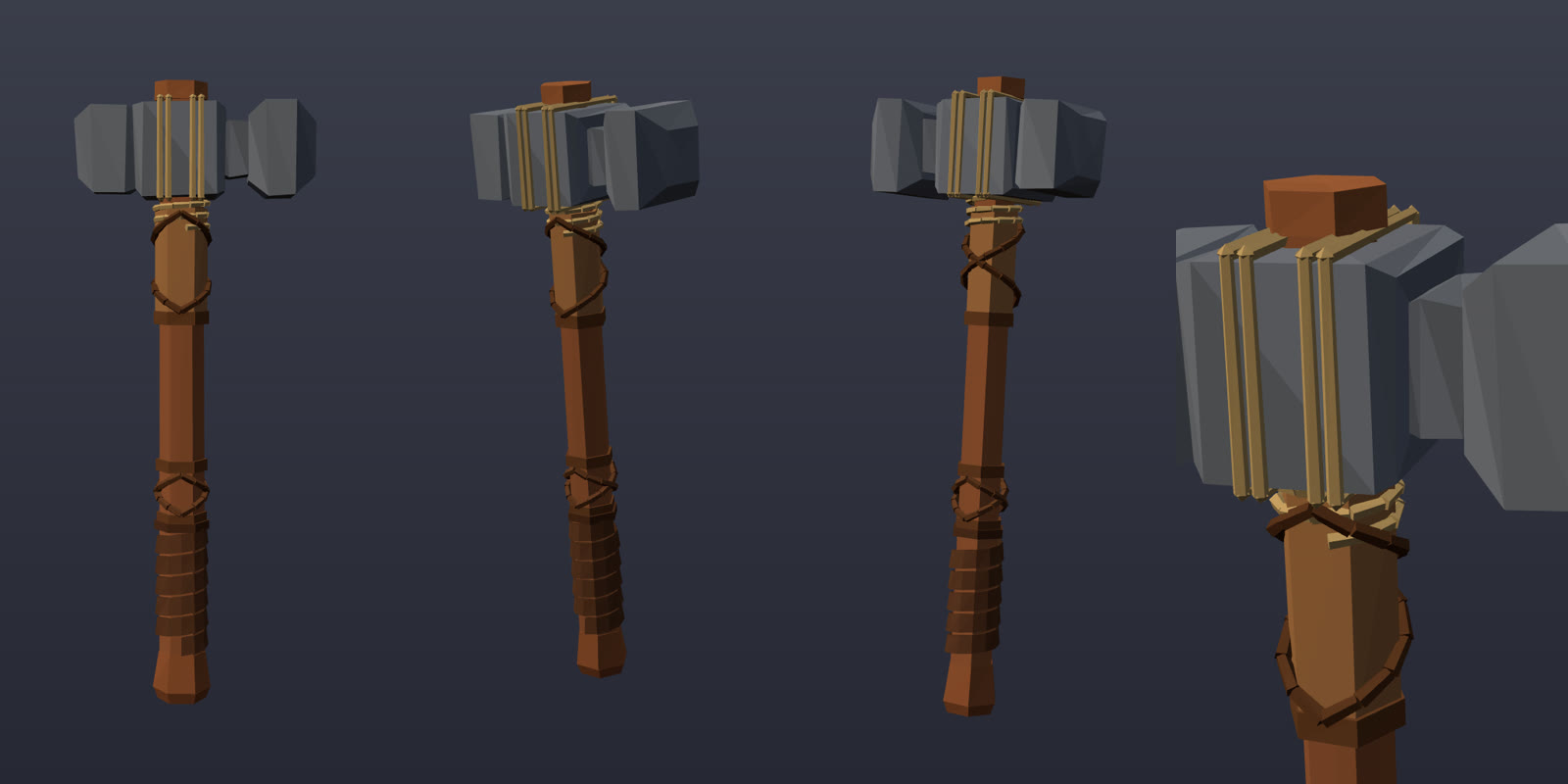
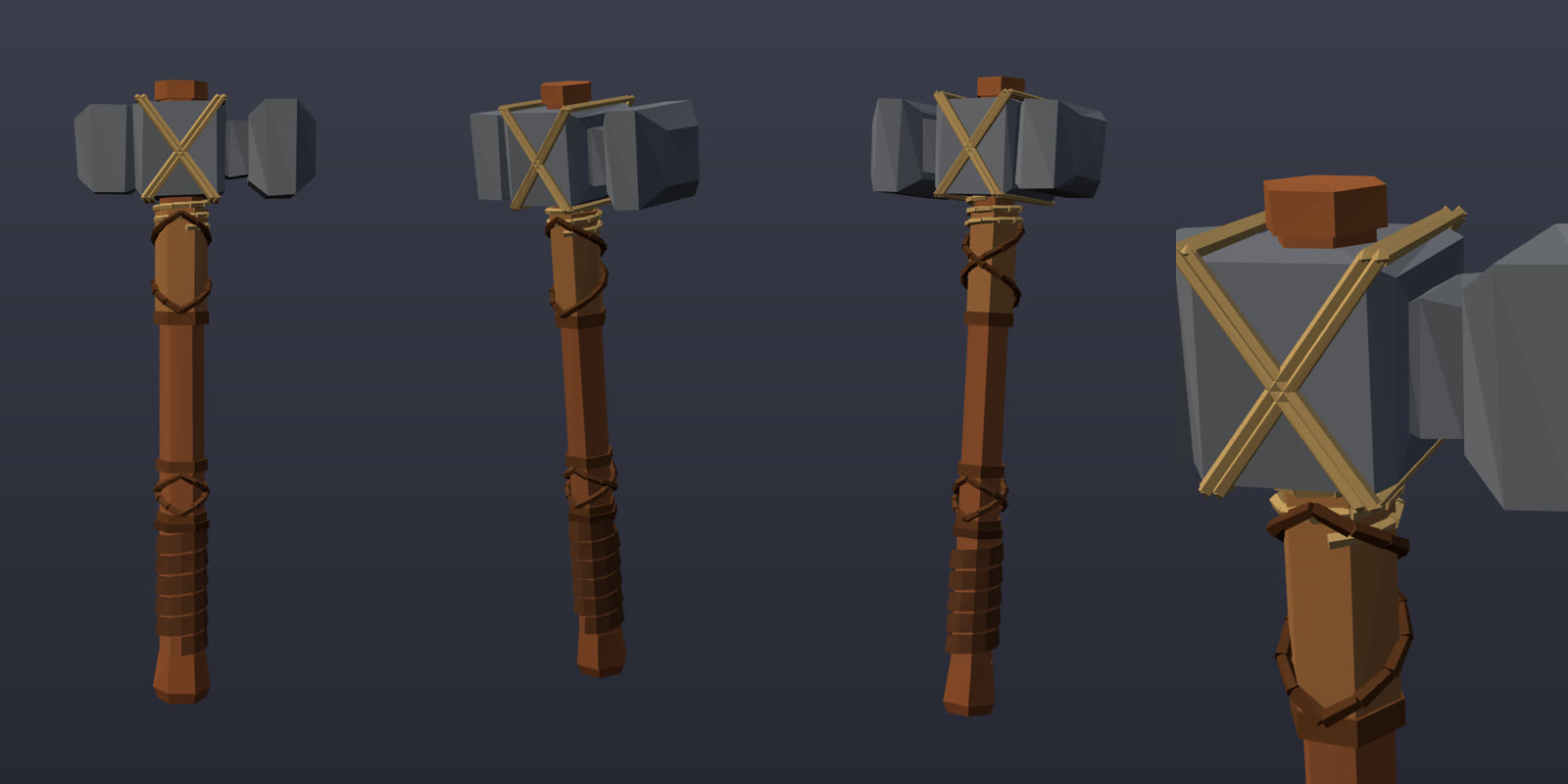
On the sheet it is a big forged sledge. In the game it is a belt tool, so it is 42 cm long, with the sheet's proportions and a head of stone made of four blocks: a face, a shoulder round the handle, a narrow neck and a bigger face. The first try was too tall. Octagonal blocks made it look like a barrel, so it went back to flat faces with heavily bevelled ends. The twine holding the head was first wound straight up and down; now it crosses into an X on both sides, as on the stone axe.
The bow
The bow changed the most along the way:
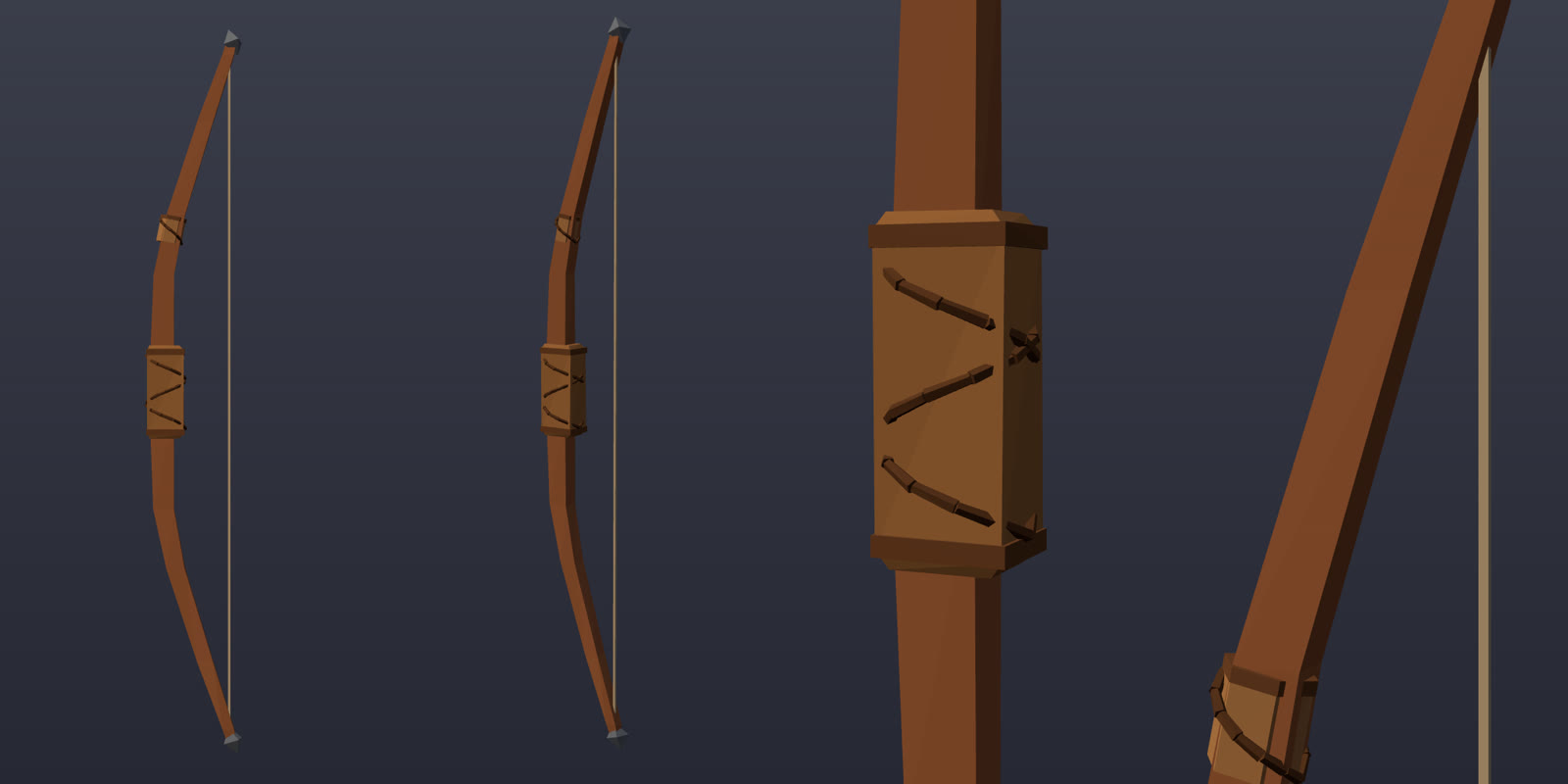
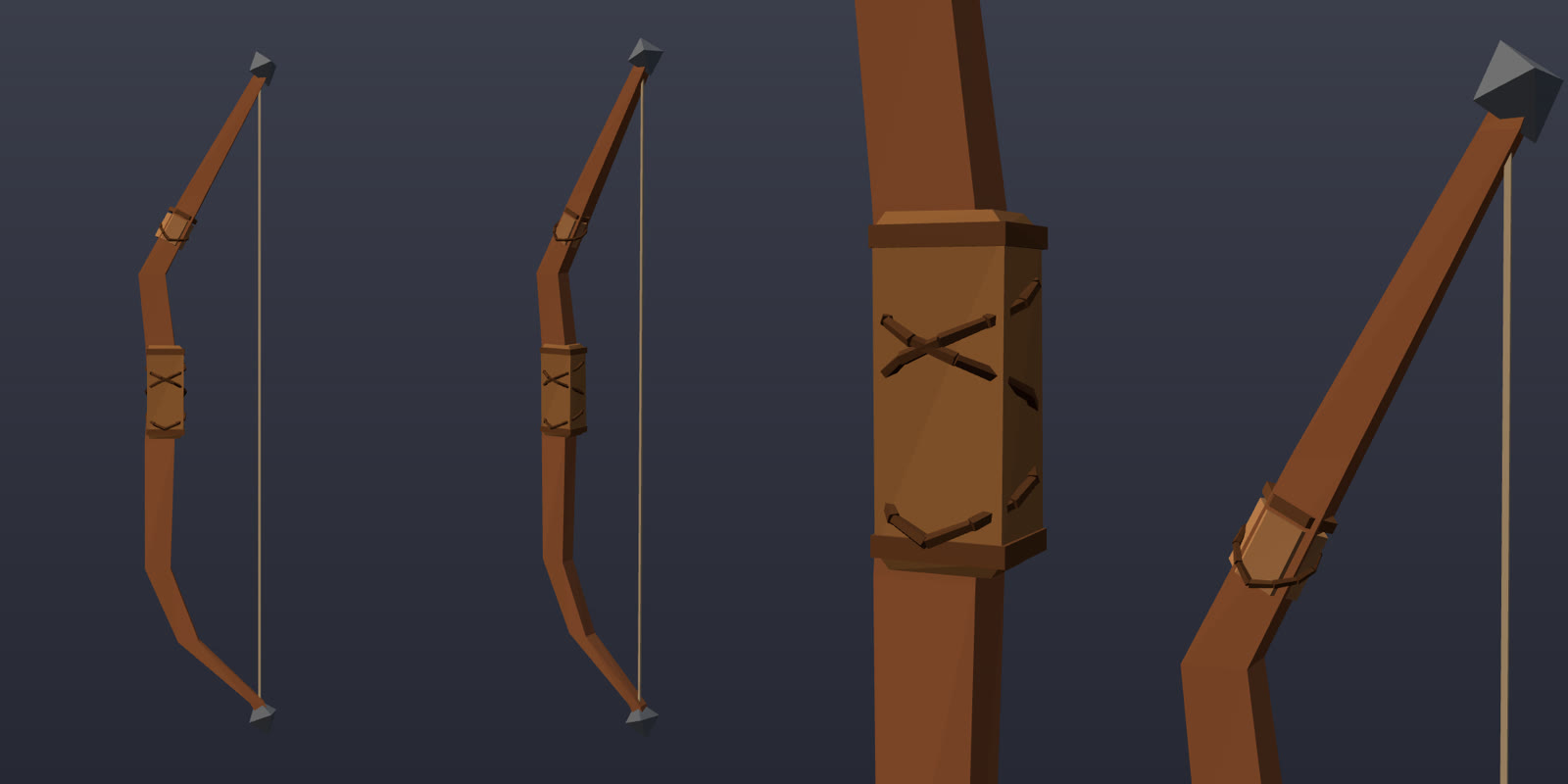
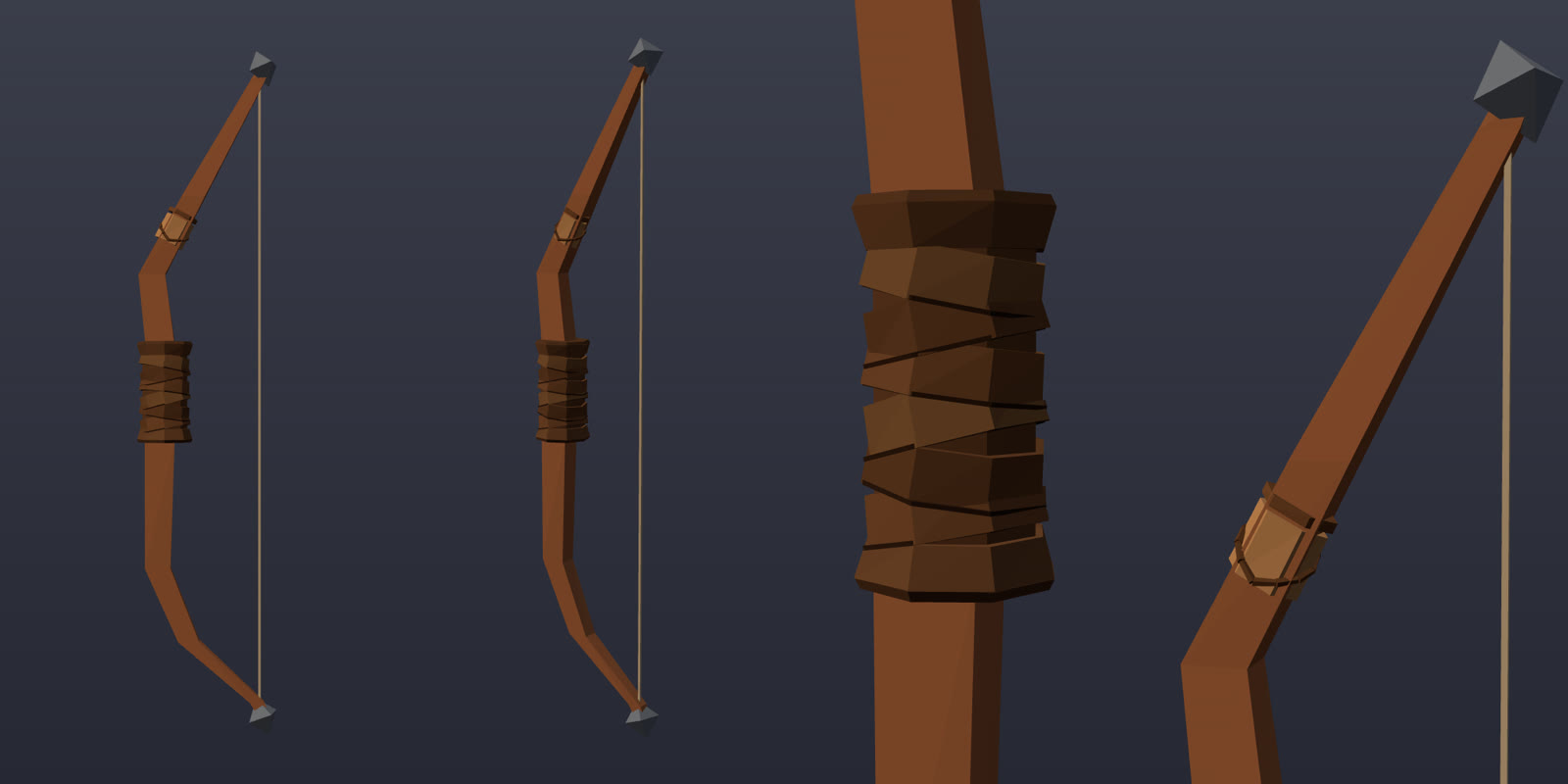
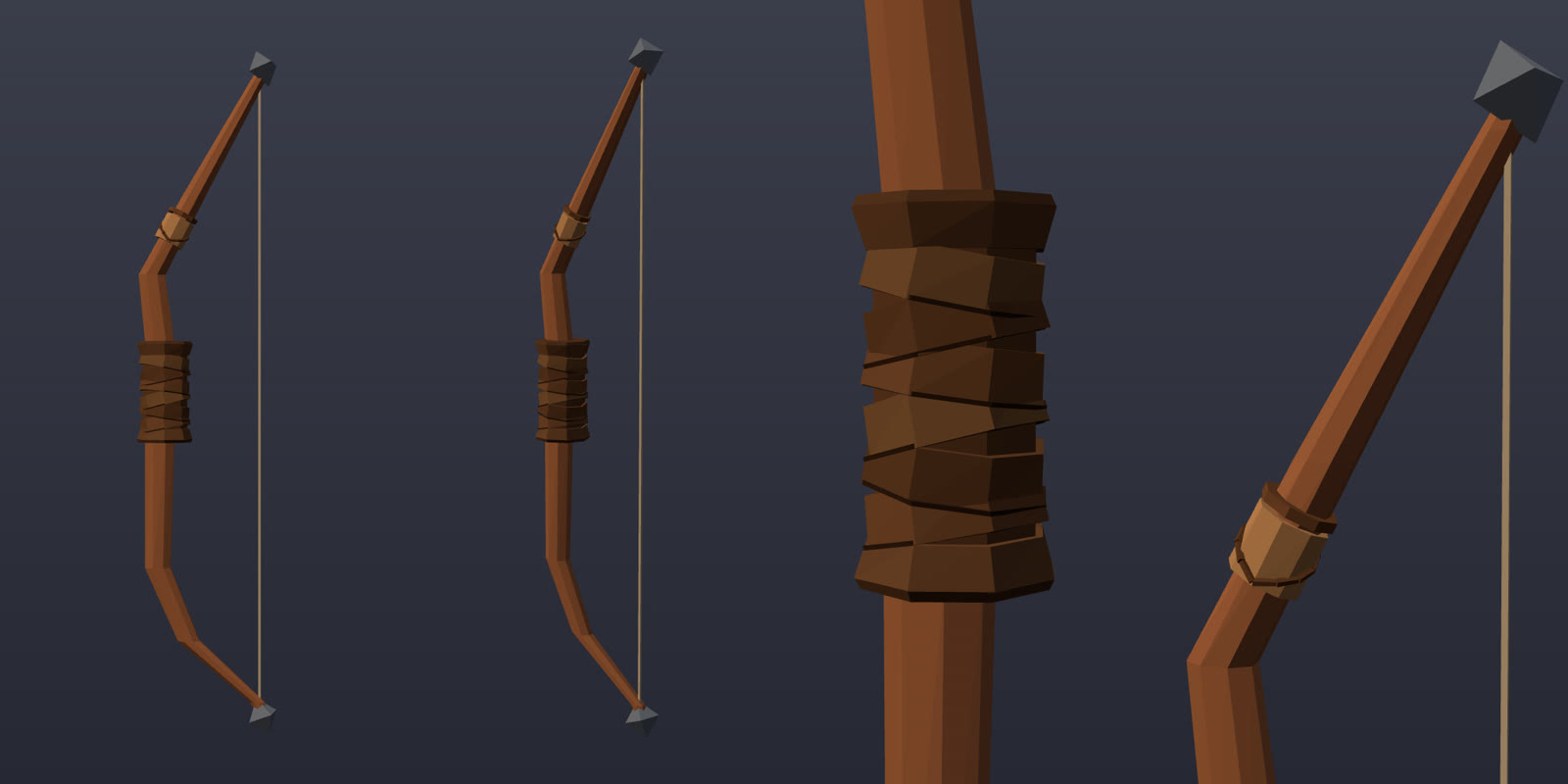
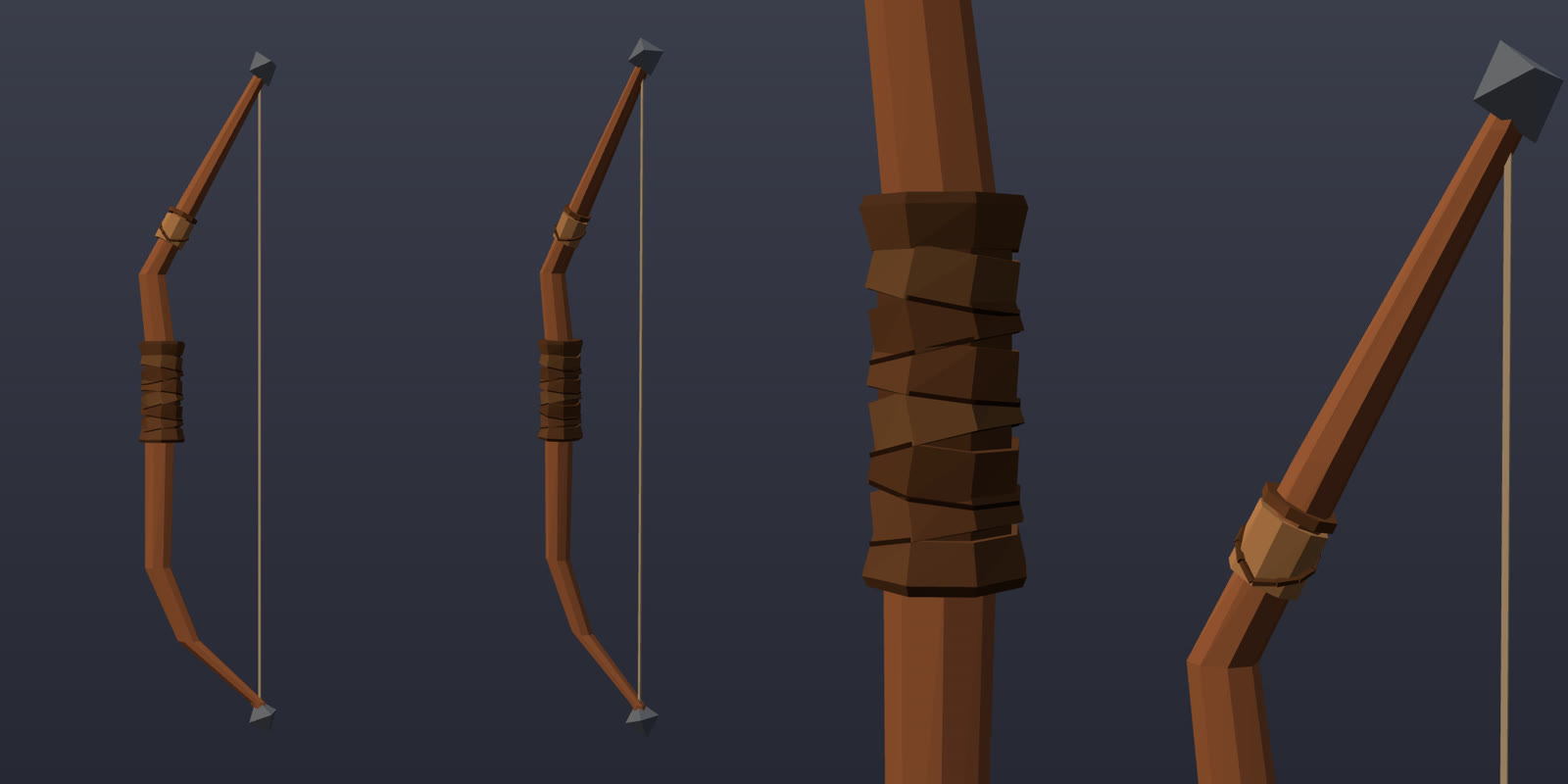
- Deeper. The first version was too flat. On the sheet the string stands far behind the grip, and the limbs are made of straight lengths with clear bends: out of the grip they lean away from the string, then turn hard towards it. The new bow is deeper and a little shorter, with its string 20 cm behind the grip. A full draw ends exactly where it did, so the archer's arms didn't need to change.
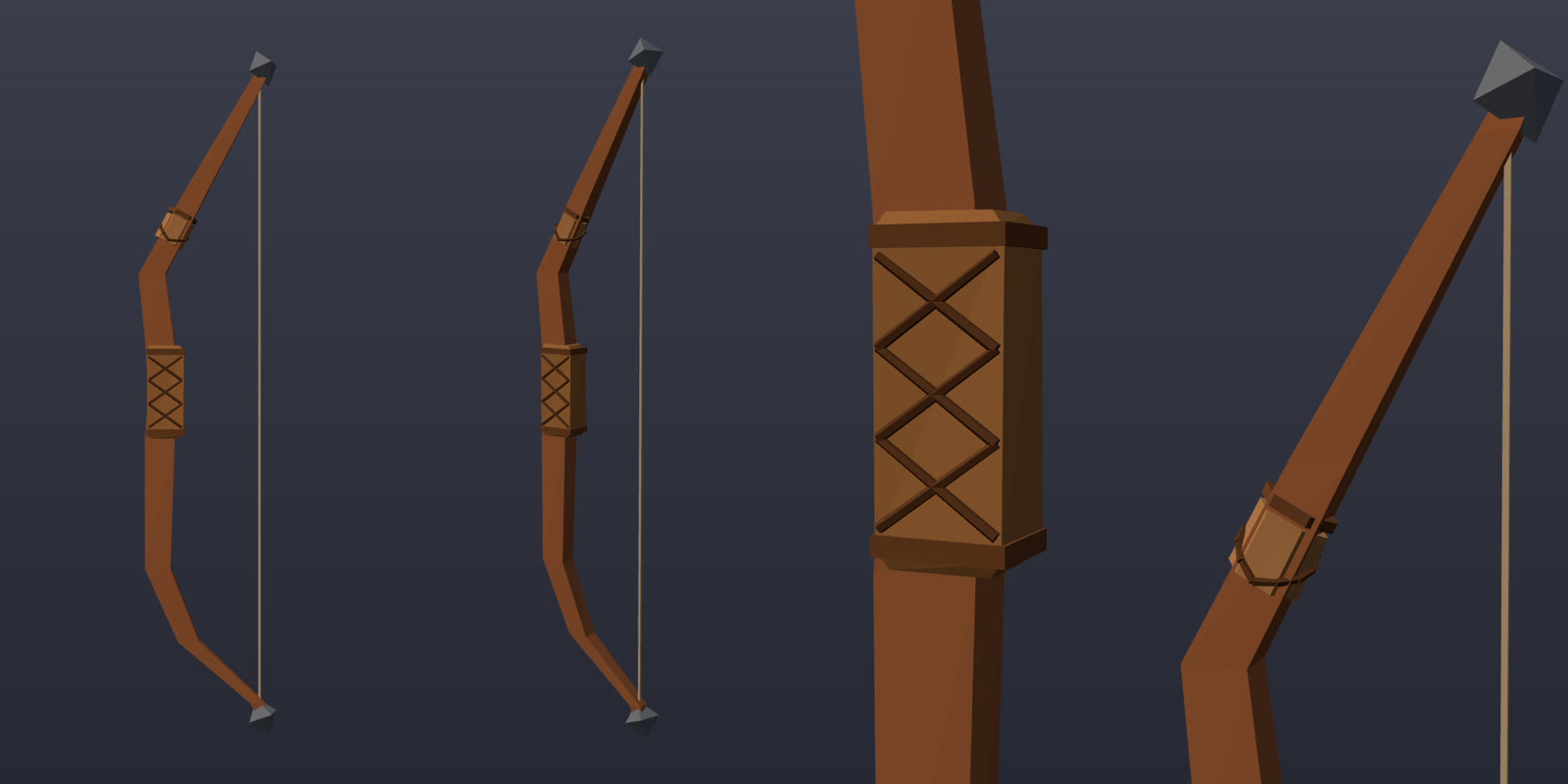
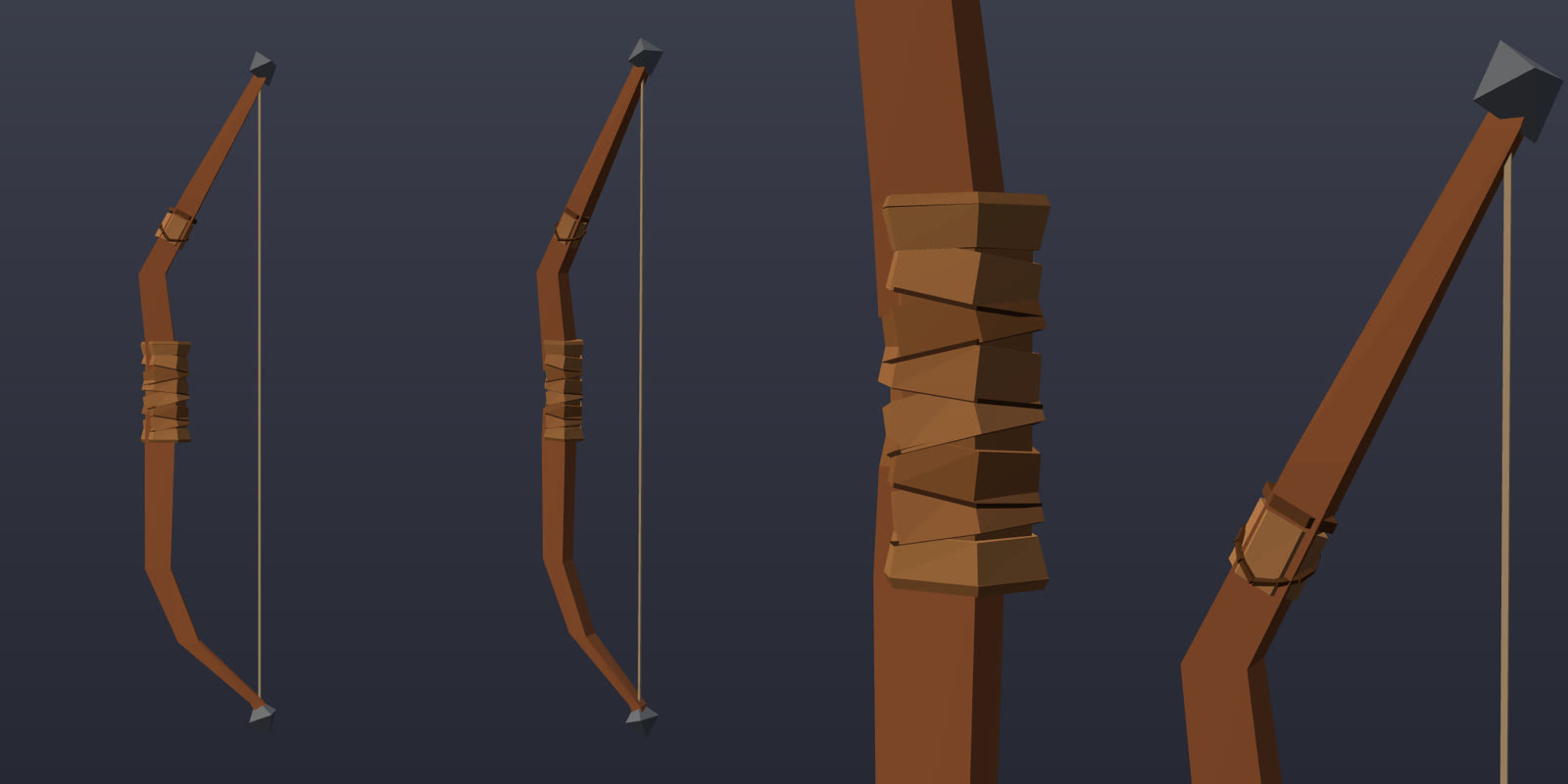
- Leather, not thongs. The grip first had thin thongs crossed in Xs. The sheet shows wide leather straps wound round at uneven slants, each over the one below, with flared cuffs at both ends. The straps then became darker and the grip thicker and octagonal, and in the end about 17% narrower.
- Facets. The limbs, at first plain four-sided bars, became octagons like the grip. A laced band sits at the upper limb's bend, and knapped stone caps hold the string at the tips.