Nemeton
A looser walk
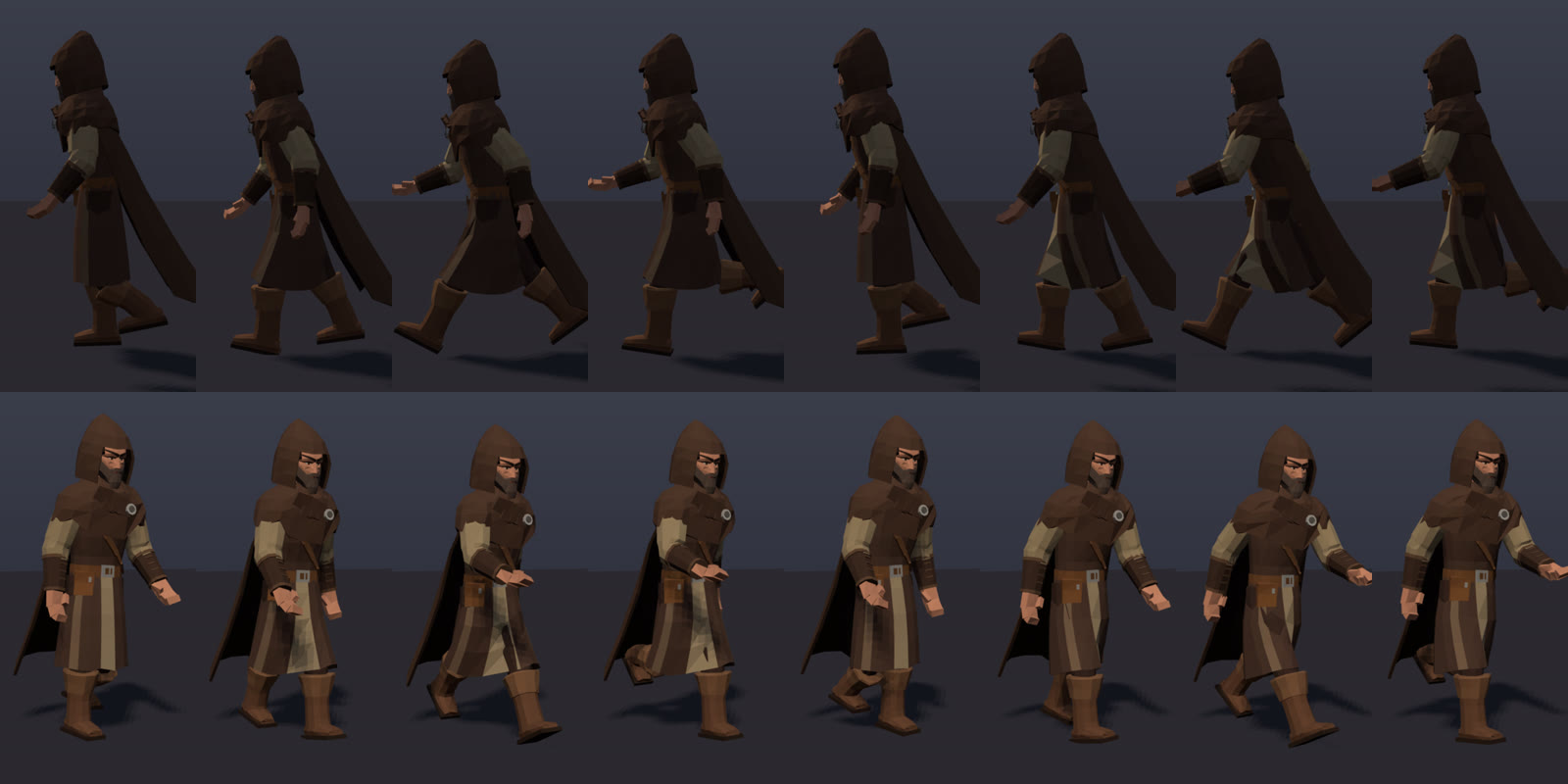
The new hero looked good standing still, but walking he was stiff: an upright post with legs swinging under it like pendulums, feet always flat, arms straight from the shoulder. This round went through the whole stride.
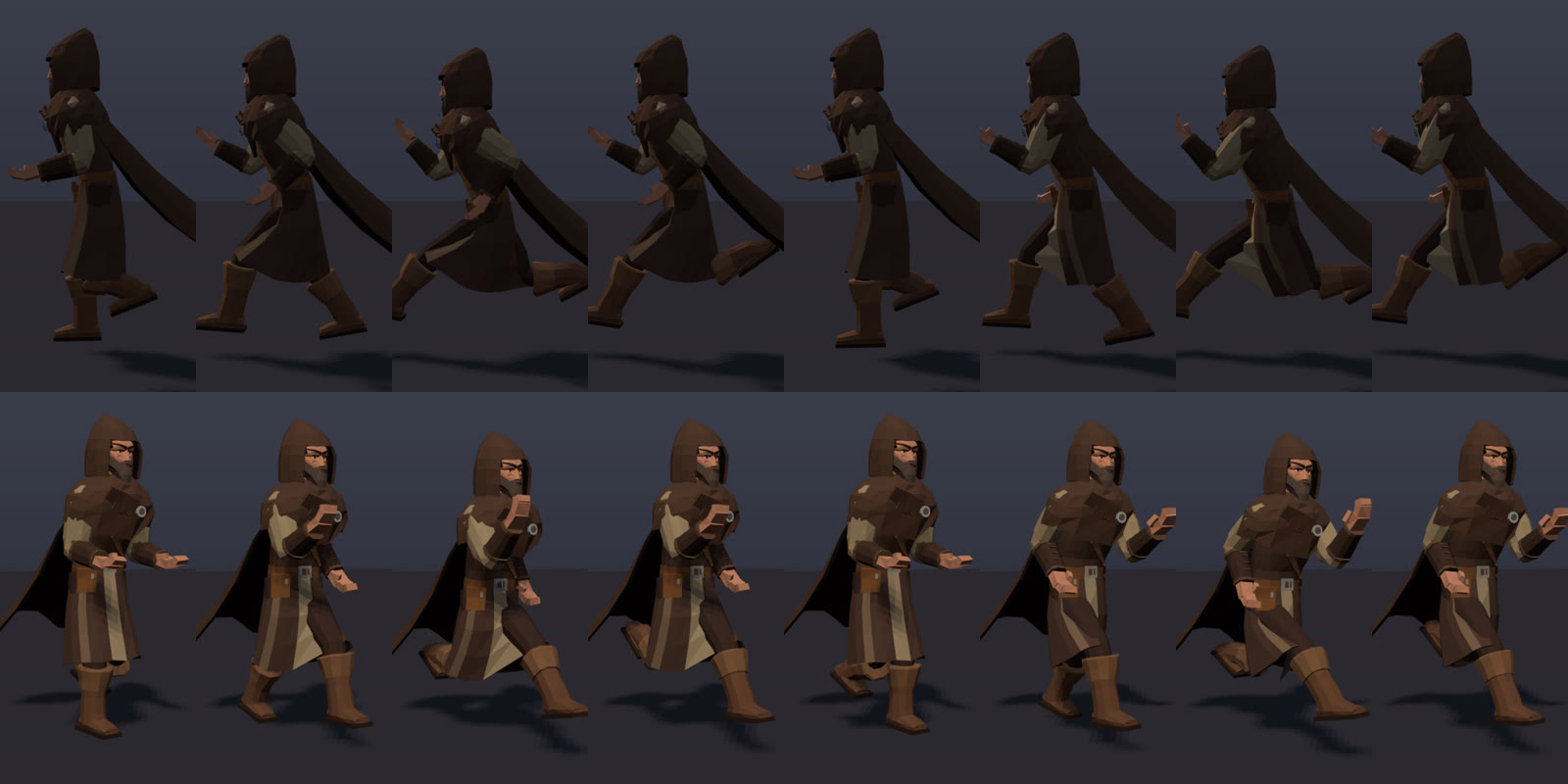
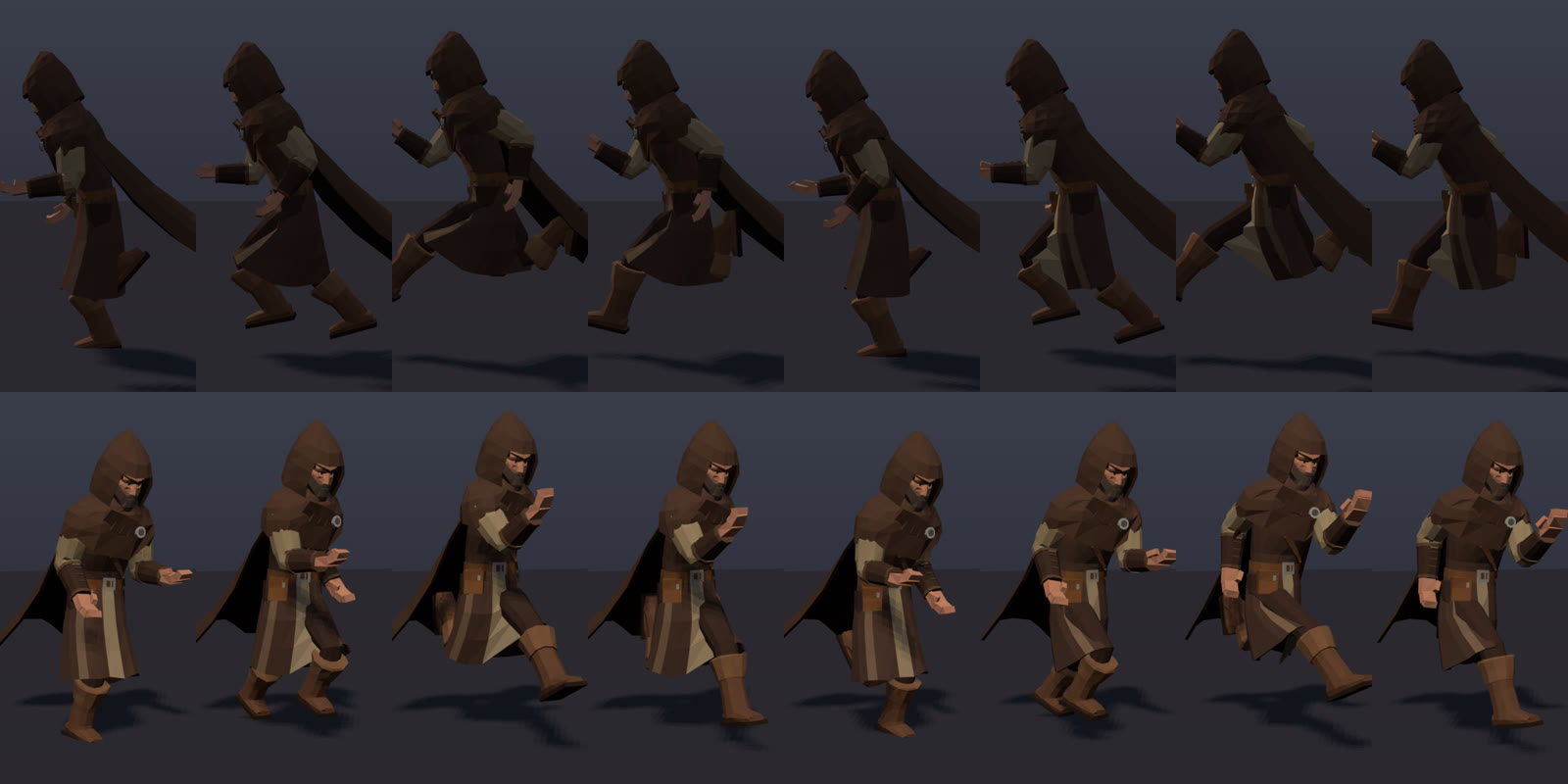
To see a walk you need more than one picture, so the preview mode got a new view: lowpoly --preview strip.png --pose gait draws one full stride in eight frames, from the side and three quarters from the front, with the cloak swinging as it does in the game.
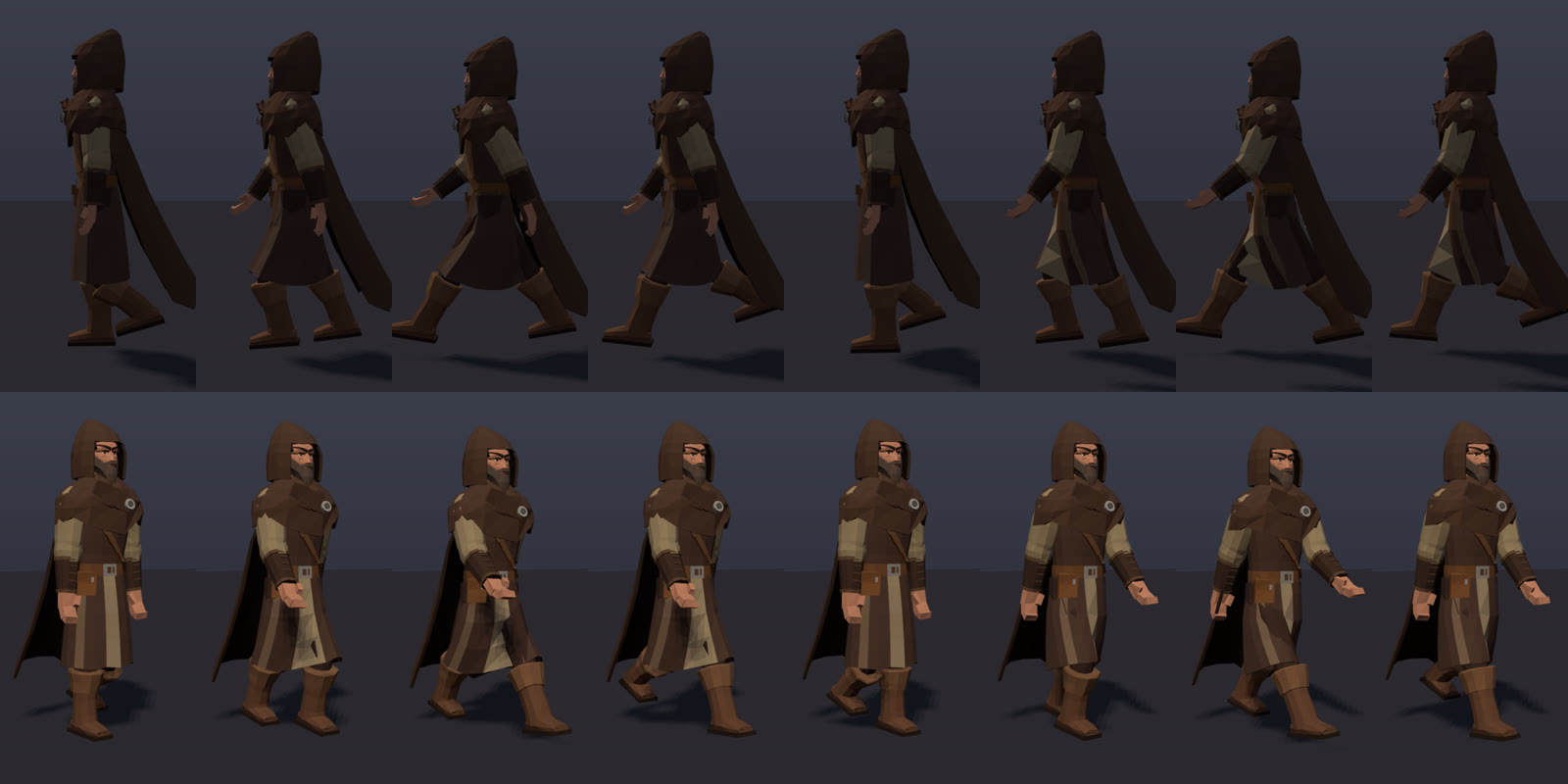
What changed in the walk
- The feet roll. The heel lands first with the toes up, the foot lies flat while the weight passes over it, then it peels off onto the toes and pushes away behind.
- The knee gives. It bends a little as the weight comes onto the leg, and most just after the push-off, to carry the foot through.
- The hips work. The body shifts over the leg it stands on, the pelvis turns with the leg going forward and drops a little on the free side.
- The shoulders answer. The chest turns and tilts against the hips, the arms swing a beat behind the legs with the elbows out to the sides, bending more as each arm comes forward. The shoulders themselves roll too: forward and up with the arm that swings forward, back with the one behind, rising and falling with the stride.
- The head stays calm. It takes back most of the turning, so the hero keeps looking where he goes.
- He stands up straight, and leans into the walk. The sculpted figure has a slight stoop; standing, the rig now holds the chest back, with the head bowed a little forward. Walking, the chest tips forward about ten degrees and the head bows further; running leans in more, the head bowed twice as much.
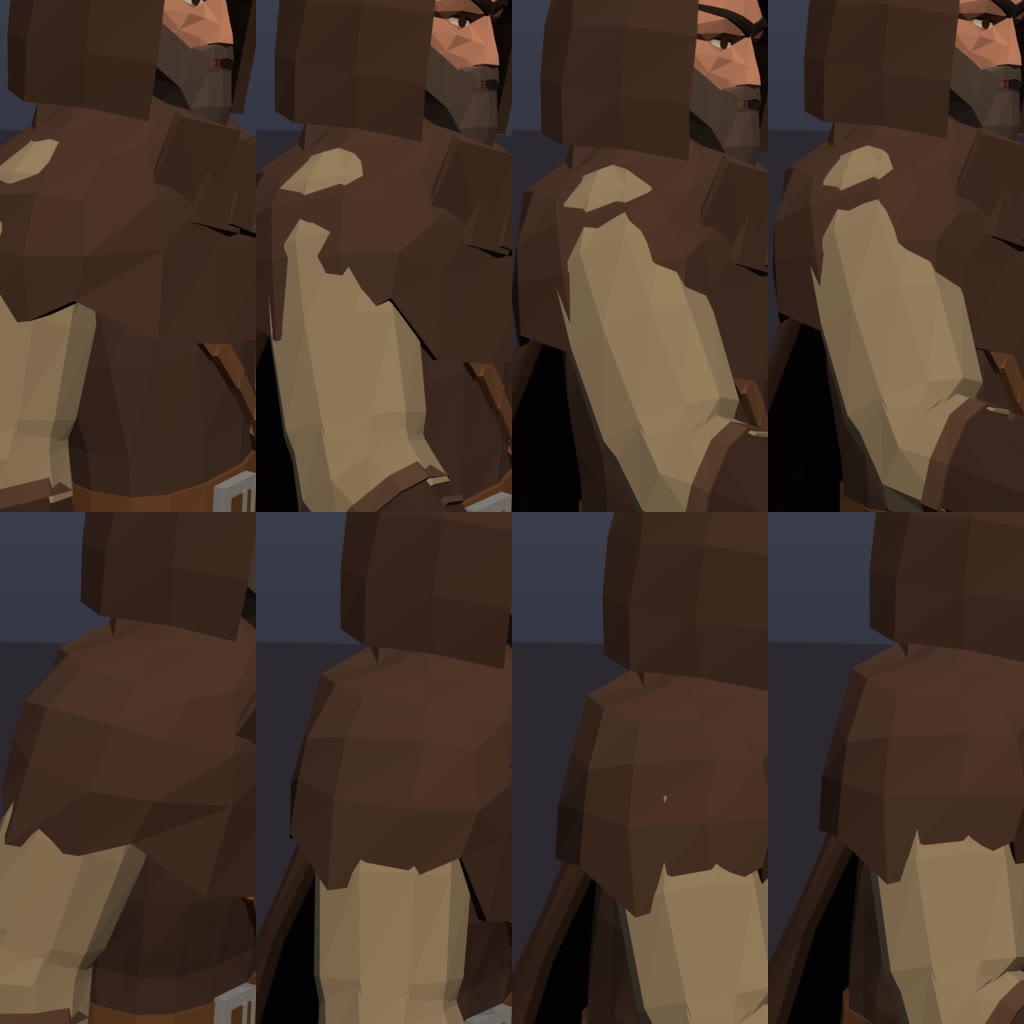
The arms swinging further showed an old flaw: the top of the shirt sleeve poked through the leather cowl over the shoulder. Now the hidden top of the sleeve only half follows the arm and its cap sits lower, while the cowl's outer edge, resting on the arm, goes partly with it.
Running
The old run had the body bob the wrong way: highest when one leg passed the other. Running is the opposite of walking here: the body sinks onto the bent stance leg and is highest in the flight between steps. The fists also pumped up to the chin; now they stay at the chest, the forward one crossing a little in front. The swinging leg now folds tight, the heel coming up under the seat, and opens only just before the foot lands.
The axe swing
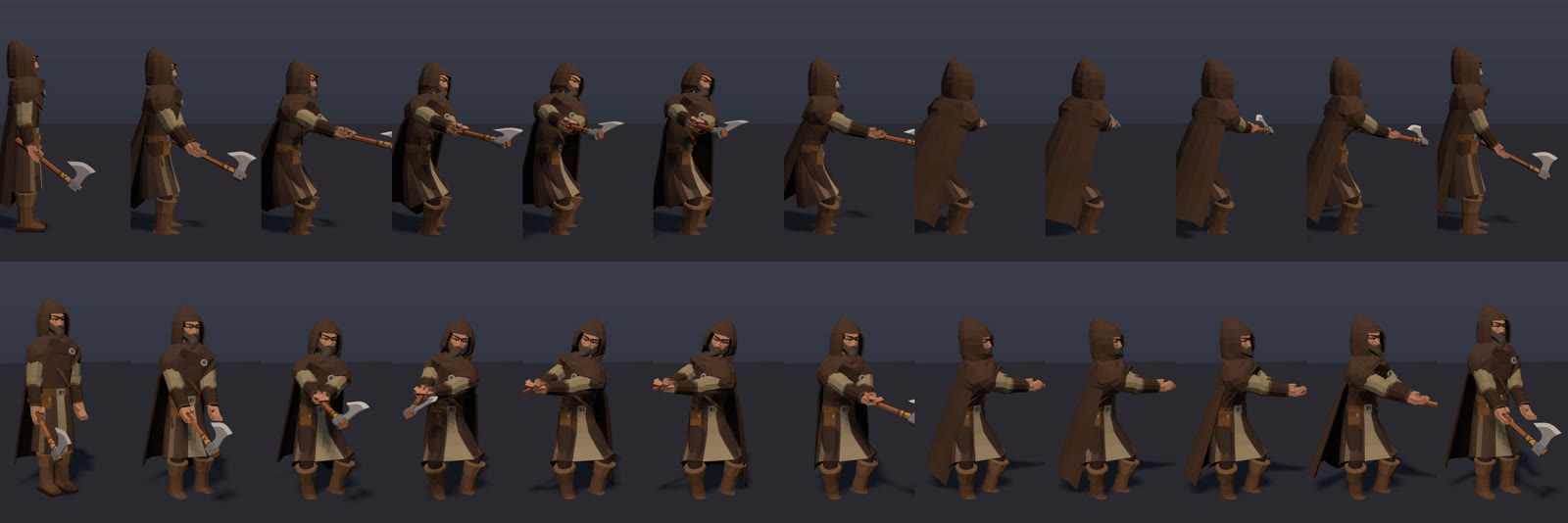
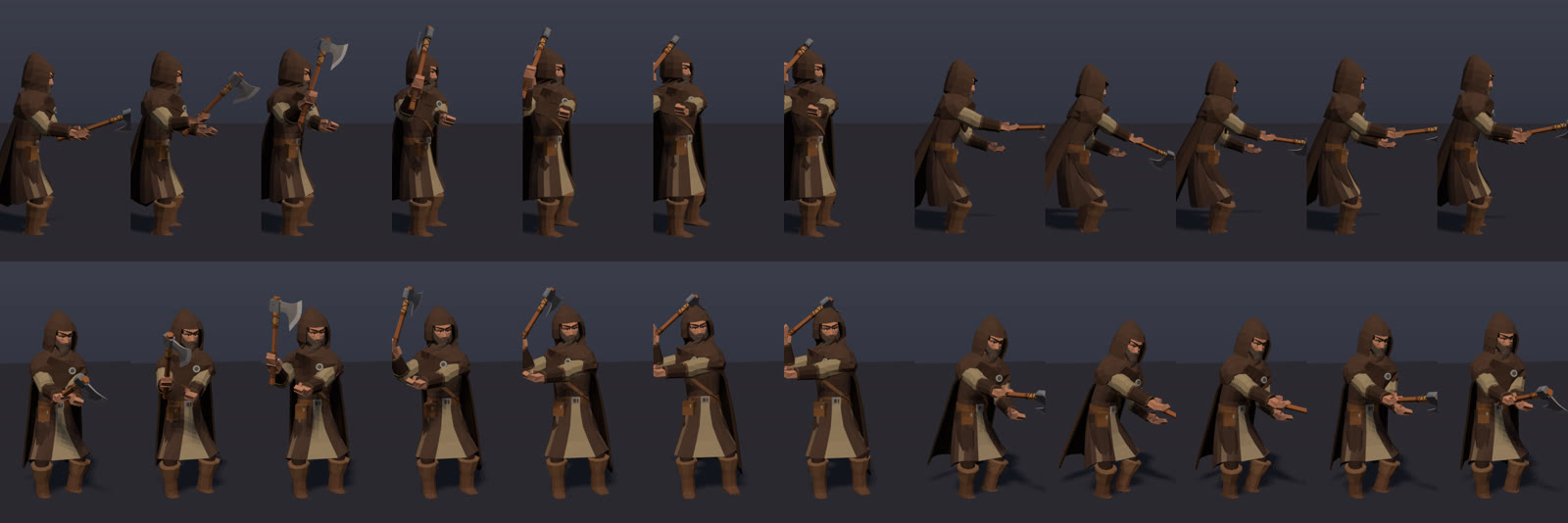
Chopping got the same treatment. The old swing was only the chest turning one way and back, the arm held straight out with the axe pointing ahead, and between two blows the hero stood up and crouched again. The new one is a loop of key poses joined by one smooth curve, so nothing stops dead:
- Ready: knees bent, the axe in front.
- Wind-up: slow, the chest turning away, the elbow out and the axe cocked behind the shoulder, the weight on the back foot. A moment at the top.
- Strike: fast, the hips lead, the chest follows, the arm straightens and the blade meets the trunk.
- Bite: the axe stays in the wood for a beat, then a calm pull back to ready.
The axe also turns in the hand so that its edge always leads: the head is turned about the handle to face the way the strike goes, worked out from the pose every frame, so the blade cuts edge first. Carried, the axe is held low in front with the edge down. Held down, one swing runs straight into the next. The swing is also nearly twice as long as before (1.1 s), which leaves room for all of it; felling a tree takes the same number of blows, so it takes longer.
Leaning into turns
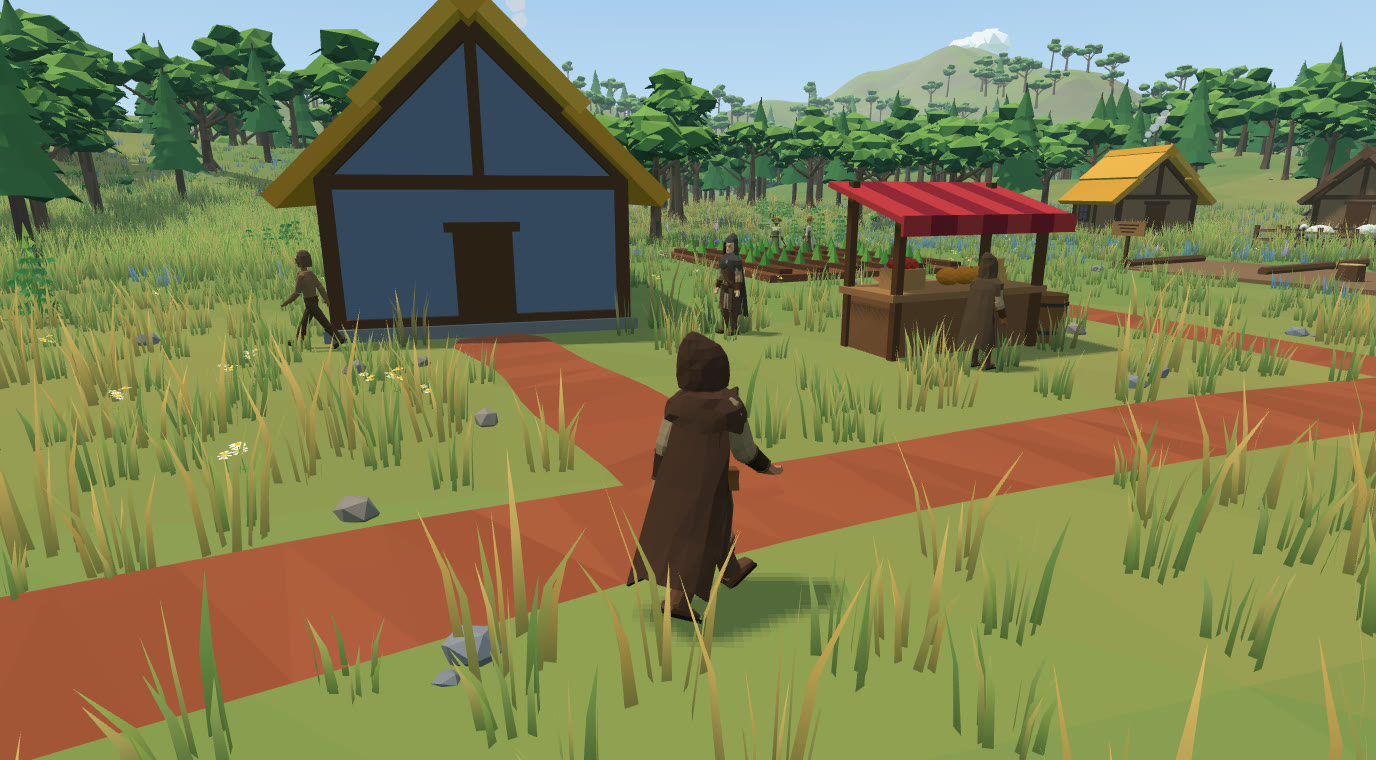
The faster you go and the sharper you turn, the more the hero leans in, the cloak swinging out the other way. The villagers use the same walk, so the whole village moves a little more naturally.
And underfoot
The meadow is a darker, deeper green now, closer to the reference picture; the tall grass and the flowers stand out better against it.