Nemeton
The sign of the grove
The game has a name now, Nemeton. A nemeton was a sacred grove: a clearing in the forest where people gathered for rites. A name like that needed a sign, and the new status bar needed something in its middle. They turned out to be the same thing. Every option in this post was drawn by code and tried in the game itself, by day and by night, before anything was chosen.
Four materials
The health and food bars moved from the top of the screen to the bottom, with the four quick slots under them and a sign between the two bars. The first question was what the bar should be made of. Four looks went into the game:
- stone: a lintel of the same blue-grey stone as the cottages;
- leather: the stitched, tooled leather of the inventory windows;
- oak: a beam with iron bands and a burnt boss in the middle;
- gold knotwork: no panel at all, only thin gold lines and a dark diamond laid over the world.
Each one has NEMETON written in ogham, the old Irish script of notches along a stem line. In ogham the word is N E M E T O N: five strokes below the line, four across, one slanted, four across, three above, two across, five below.
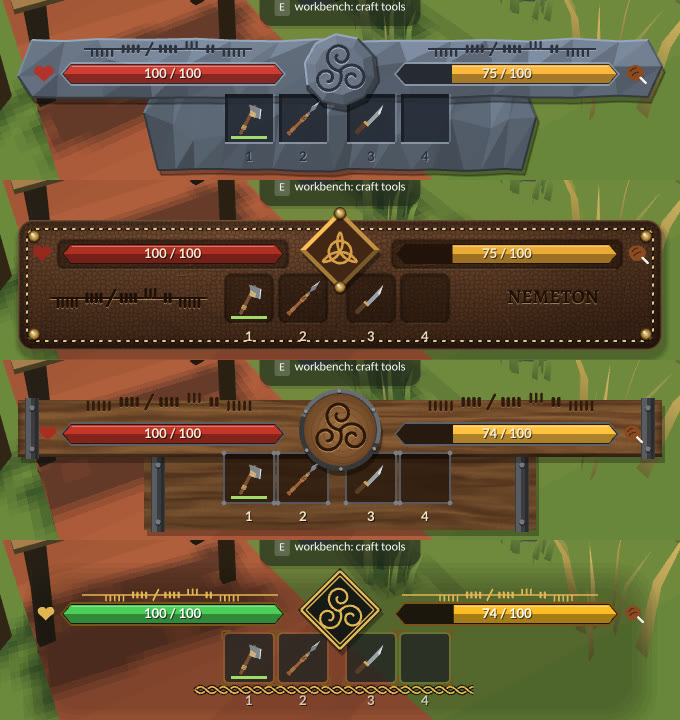
The gold won. Unlike the others, it doesn't put a slab across the bottom of the screen, so the forest stays in view.
Four ways to carve it
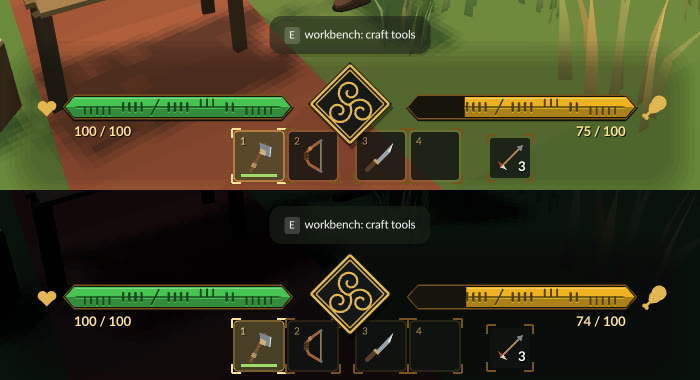
The second round kept the gold and changed the details. The ogham moved into the fill of the bars, so you can read the whole word only when a bar is full, and it wears away as the bar empties. Four variants tried different ways to cut it and different places for the numbers and decorations: engraved grooves, bright strokes, cuts through to the dark trough, a plaited gold band, a twisted cord around the slots, triquetras on each side.
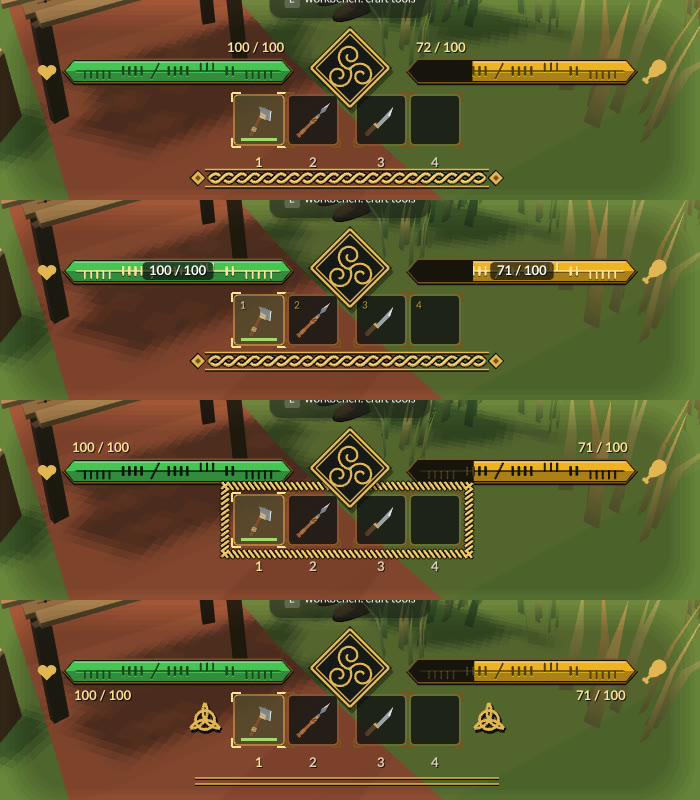
The final bar takes a piece from several of them: the engraved ogham of the first, the numbers under the outer ends of the bars from the last, and the slot keys in the corner of each slot. The plait was dropped because the bar read better without it.
What goes in the middle
The bar started with a gold triskele, three joined spirals, as a placeholder. Then came signs tied to the name and the script:
1. the grove: four pines round a fire under a crescent moon, the nemeton itself; 2. the ogham stone: a standing stone with N cut along its edge; 3. the ogham ring: NEMETON round a ring, a sacred fire in the middle; 4. Fionn's wheel: the old ogham key from the Book of Ballymote, five rings with lines through them.
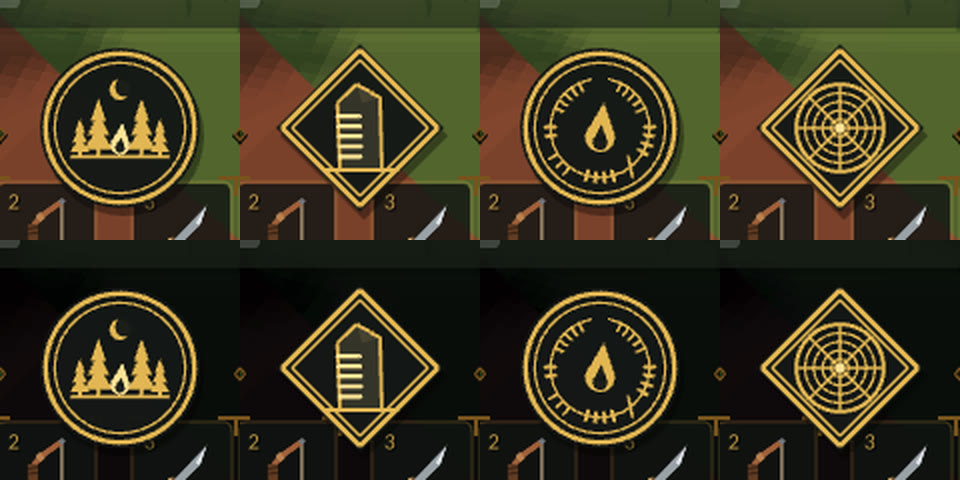
The grove was the favourite, so round two wrapped it in NEMETON: on a thin ring, engraved into a broad gold hoop, or with the strokes sticking out past the rim like a seal's teeth. Next to them we put the old triskele again for comparison. Round three did the same for the triskele: the inscription on a diamond, a ring and a hoop.
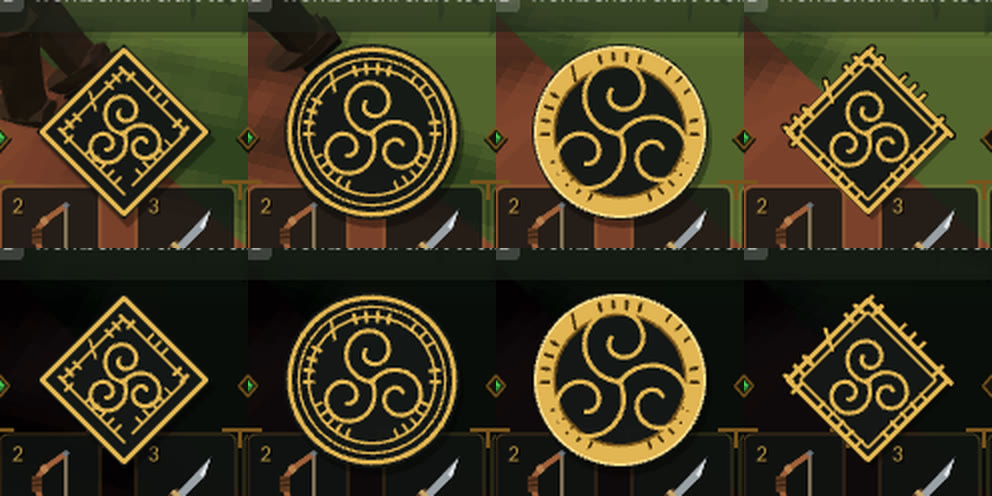
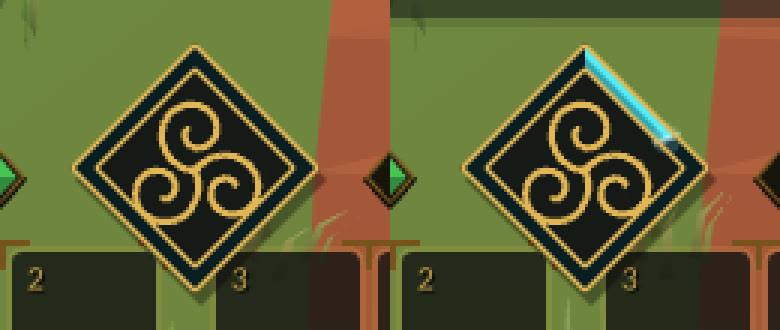
In the end the plain triskele in its dark diamond won. At this size it's the only one you can read at a glance, and the bars around it already carry the ogham. The diamond with the toothed inscription wasn't wasted: it's kept for enchantments and charms later on.
A rim that fills up
The diamond does a job too. While you craft or build, its rim fills with turquoise light clockwise from the top, so you can see how much work is left without opening any window.
From the bar to the icon
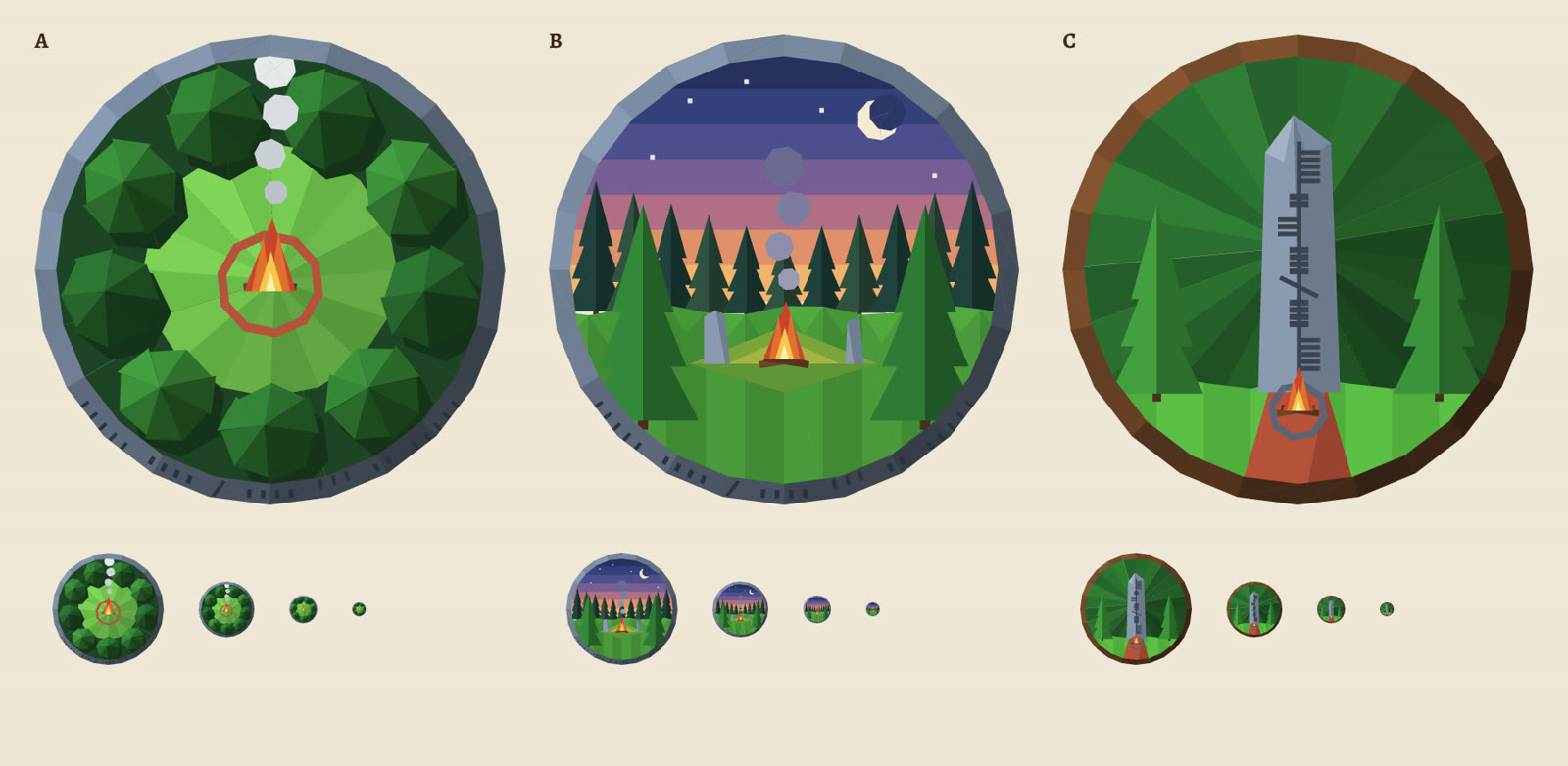
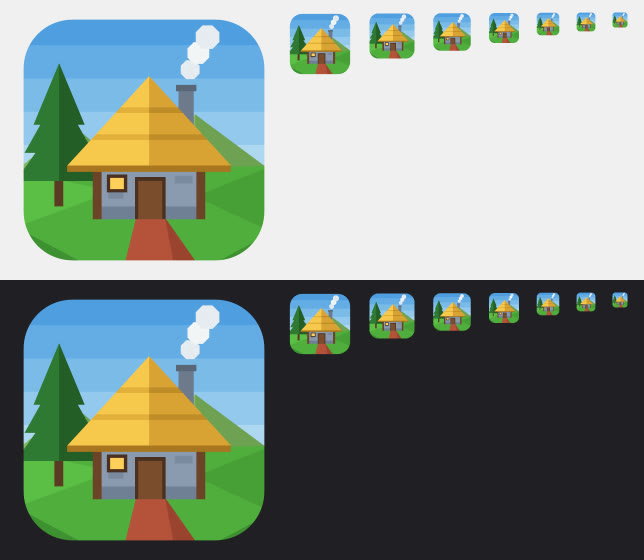
The first logo proposals were small paintings: the clearing seen from above, the grove at dusk between two standing stones, an ogham stone in the forest. The game's icon was a stone cottage with a thatched roof. They looked nice, but at 16 pixels they turned into green smudges.
The triskele had already passed that test in the status bar, where it sits at about the size of a desktop icon. So it became the sign of the game: the launcher's logo next to the name, the icon of the game and the launcher on Windows, the window icon on Linux, and the icon of this website. It is all drawn by the same code, from 256 pixels down to 16, and stays sharp on light and dark backgrounds.